Bats for bats
THE LETCOMBE BROOK PROJECT
Beschreibung
Bats for Bats will be an environmental education programme from The Letcombe Brook Project, a charity working to protect and enhance Letcombe Brook, a globally rare chalk stream, while engaging our community with nature and supporting their wellbeing. Daubenton bats specifically feed around waterways and we are keen to encourage them to our brook.
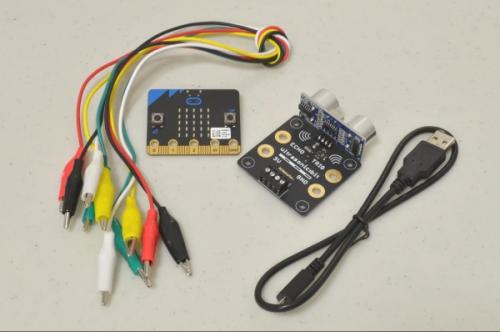
The event will engage Key Stage 2 and Key Stage 3 pupils through a unique combination of technology, coding and wildlife conservation. Participants will use micro:bits, ultrasonic:bits and Scratch to model how bats use echolocation to navigate and find food (inspired by Digitall resources). They will also design and test solutions to environmental challenges, such as reducing the impact of street lighting on bats feeding along the brook.
Participants will take part in practical, hands-on activities and outdoor learning through bat walks using bat detectors to identify local species. (older children may be able to make bat sensors using microbits that we could use outdoors).
Our goals are to increase understanding of biodiversity, develop digital skills, connect young people with their local environment and inspire action to support wildlife. The project demonstrates how technology can be used to solve real-world conservation challenges.
The programme will be offered to targeted local schools, but we would like to repeat it on a weekend for families in the future but this is currently hindered by lack of computers. The events will be held in host schools and the school computers used. Sessions will last for four hours and may be delivered as two shorter sessions for our younger pupils.
What makes this event special is the combination of specialist equipment, environmental expertise and a direct connection to a globally rare habitat. While micro:bits are used in schools, access to sonar technology, bat-detecting equipment and conservation-focused activities is rarely available. When working with schools we will only be able to work with a select number of children and we will prioritise disadvantaged and disengaged pupils. We want young people to understand the value of biodiversity and the importance of looking after a globally rare habitat. This should also give pupils an understanding of how technology can be used to support ecology and potential future careers.
The event will engage Key Stage 2 and Key Stage 3 pupils through a unique combination of technology, coding and wildlife conservation. Participants will use micro:bits, ultrasonic:bits and Scratch to model how bats use echolocation to navigate and find food (inspired by Digitall resources). They will also design and test solutions to environmental challenges, such as reducing the impact of street lighting on bats feeding along the brook.
Participants will take part in practical, hands-on activities and outdoor learning through bat walks using bat detectors to identify local species. (older children may be able to make bat sensors using microbits that we could use outdoors).
Our goals are to increase understanding of biodiversity, develop digital skills, connect young people with their local environment and inspire action to support wildlife. The project demonstrates how technology can be used to solve real-world conservation challenges.
The programme will be offered to targeted local schools, but we would like to repeat it on a weekend for families in the future but this is currently hindered by lack of computers. The events will be held in host schools and the school computers used. Sessions will last for four hours and may be delivered as two shorter sessions for our younger pupils.
What makes this event special is the combination of specialist equipment, environmental expertise and a direct connection to a globally rare habitat. While micro:bits are used in schools, access to sonar technology, bat-detecting equipment and conservation-focused activities is rarely available. When working with schools we will only be able to work with a select number of children and we will prioritise disadvantaged and disengaged pupils. We want young people to understand the value of biodiversity and the importance of looking after a globally rare habitat. This should also give pupils an understanding of how technology can be used to support ecology and potential future careers.
Veranstaltungsort
Altersgruppe
8 - 13
Schwierigkeitsgrad

Typ Offline-Event
Datum 25.09.2026 13:30 - 17:30
15.10.2026 13:30 - 17:30
Adresse c/o Vale & Downland Museum
OX12 8HZ Wantage
Max. Teilnehmerzahl 30 Ihr möchtet am Event teilnehmen? Dann kontaktiert bitte den unten genannten Ansprechpartner.
Die Teilnahme ist kostenlos.
Kontakt THE LETCOMBE BROOK PROJECT Website: www.letcombebrook.org.uk
E-Mail des Ansprechpartners: educationofficer@letcombebrook.org.uk
Social Media https://www.facebook.com/profile.php?id=61579126749471
Auf Social Media teilen


Schwierigkeitsgrad
Typ Offline-Event
Datum 25.09.2026 13:30 - 17:30
15.10.2026 13:30 - 17:30
Adresse c/o Vale & Downland Museum
OX12 8HZ Wantage
Max. Teilnehmerzahl 30
Ihr möchtet am Event teilnehmen? Dann kontaktiert bitte den unten genannten Ansprechpartner.Die Teilnahme ist kostenlos.
Kontakt THE LETCOMBE BROOK PROJECT
Website: www.letcombebrook.org.ukE-Mail des Ansprechpartners: educationofficer@letcombebrook.org.uk
Social Media https://www.facebook.com/profile.php?id=61579126749471
Auf Social Media teilen